The History of Festung Königstein
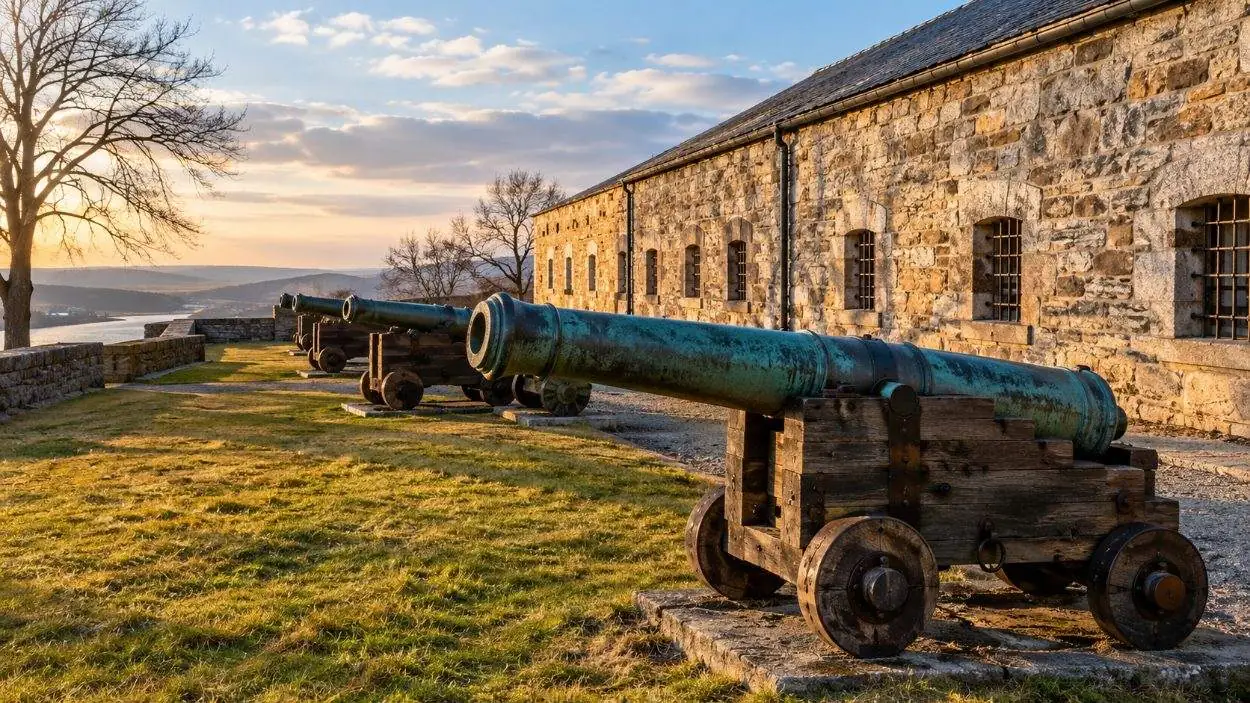
The crates
From January 1943 the Dresden state collections moved their best things out of the city and up this rock: the whole of the Green Vault, 450 crates from the Historical Museum, pieces from the porcelain and painting collections. Liotard’s The Chocolate Girl spent part of the war 240 metres above the Elbe. At the same time the fortress was Oflag IV-B, holding senior Allied officers — Polish, French, British, Dutch, Norwegian, American. Treasure in one set of rooms, generals in another, on the same nine and a half hectares.
1233, and a name that stuck
The first documentary mention is 1233, in a charter of King Wenceslas I of Bohemia naming a “Burggraf Gebhard vom Stein” — Gebhard of the Stone. Eight years later the Oberlausitzer Grenzurkunde of 1241 records the place as in lapide regis, on the stone of the king, and that is where the name comes from. The permanent exhibition that opened in 2015 takes the same three words for its title.
The oldest thing still standing is the chapel, late Romanesque, early thirteenth century, today the garrison church. Duke George the Bearded rebuilt it in late Gothic in 1516. The well came next, sunk between 1563 and 1569 — without water 240 metres up, none of what follows was possible.
1589: a hill castle becomes a state fortress
Between 1589 and 1591 Elector Christian I had the Torhaus, the Christiansburg and the Streichwehr built, and the place stopped being a castle on a hill. Almost immediately it also became a prison, and stayed one for roughly three centuries. Caspar Peucer, physician and theologian, was held from 1574; Chancellor Nikolaus Krell from 1591. The list runs on through Johann Friedrich Böttger in 1706–1707, Mikhail Bakunin after the Dresden May Uprising, August Bebel, and Frank Wedekind for insulting the monarch in a magazine. They all have their own page.
Böttger is the one people get wrong. He did not invent European porcelain up here. He was held at Königstein in 1706 and 1707 as leverage, because Augustus the Strong wanted gold out of him; the white porcelain breakthrough came in 1708, at Dresden and Meissen, after he had left.
The wars it did not lose
The fortress was never stormed and never besieged into surrender, which is true, and gets shortened into “never conquered”, which is not quite. In 1756 nobody attacked it: Elector Friedrich August II watched from up here while the Saxon army capitulated to the Prussians near the Lilienstein across the river. In 1813 there was fighting before the gates, but French troops held the place by agreement with Saxony rather than by taking it — Napoleon himself came up on 20 June that year, stayed about an hour and walked back down. By August 1813 there were 485 French soldiers stationed here. In 1866 nothing happened at all, because long-range artillery had already made the rock militarily pointless. And on 8 May 1945 it was handed over to the French General Condé. The never-conquered claim needs that last date every single time.
1945 to 2015
Soviet troops arrived on 9 May 1945, removed the valuables and the German guards, and left. From 1949 to 1955 the GDR used the rock as a Jugendwerkhof, a youth reformatory, which is the part of the story the postcards skip. In 1955 the Ministry of Culture declared it a museum. In 1991 it passed to the Free State of Saxony, which still owns it today, and three decades of restoration followed. On 1 May 2015 In lapide regis opened across 33 rooms, a good many of which no visitor had ever been allowed into.
If the history is why you are coming, budget half a day rather than the standard two to three hours. The 33 rooms are not a corridor of display cases — they are rooms, spread across the site, and the walking between them is part of the time.
One escape, in 1942
Among all those prisoners, exactly one got away. General Henri Giraud, captured in May 1940, went over the wall on 17 April 1942 on a rope about fifty metres long fitted with a wooden seat, from a point chosen because the observation tower cannot see it. The descent took around two minutes. He had been preparing for nearly two years. He reached Switzerland five days later, aged 63, travelling as a silk merchant called Heinrich Greiner. The fortress says openly that the exact route has never been fully established and that different versions circulate — the escape page gives them rather than picking one.
Hearing it on the rock
The single GetYourGuide product built around this fortress runs in English among other languages, in groups of seven or eight, and pairs the fortress with the climb up the Lilienstein opposite — the hill Saxony’s army capitulated beneath in 1756. It is new and carries no reviews yet. The fortress’s own audio guide covers ten languages if you would rather go alone.
Ways to get here from Dresden
 Most booked
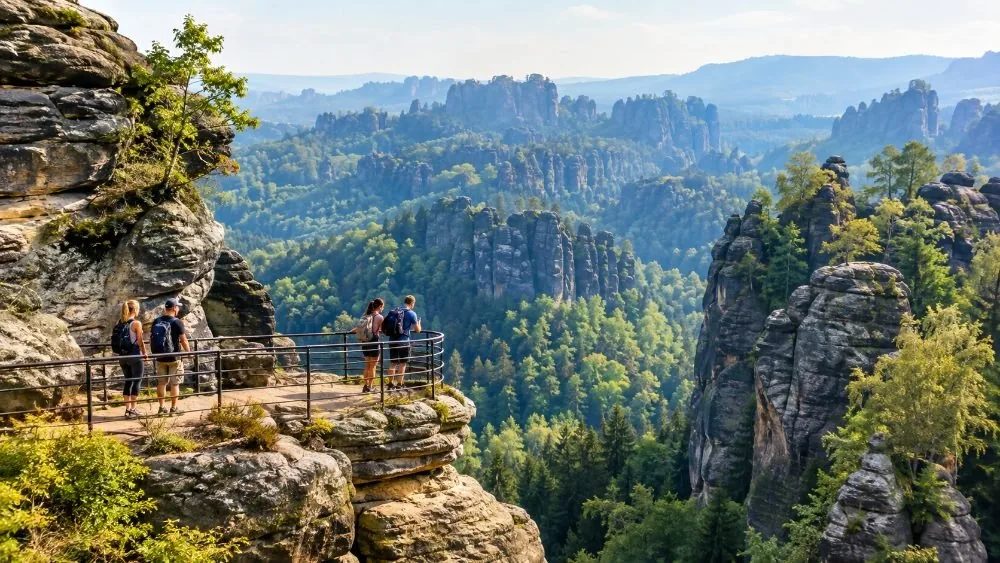
From Dresden: Saxon Switzerland National Park Full-Day Trip
 Arrive by river
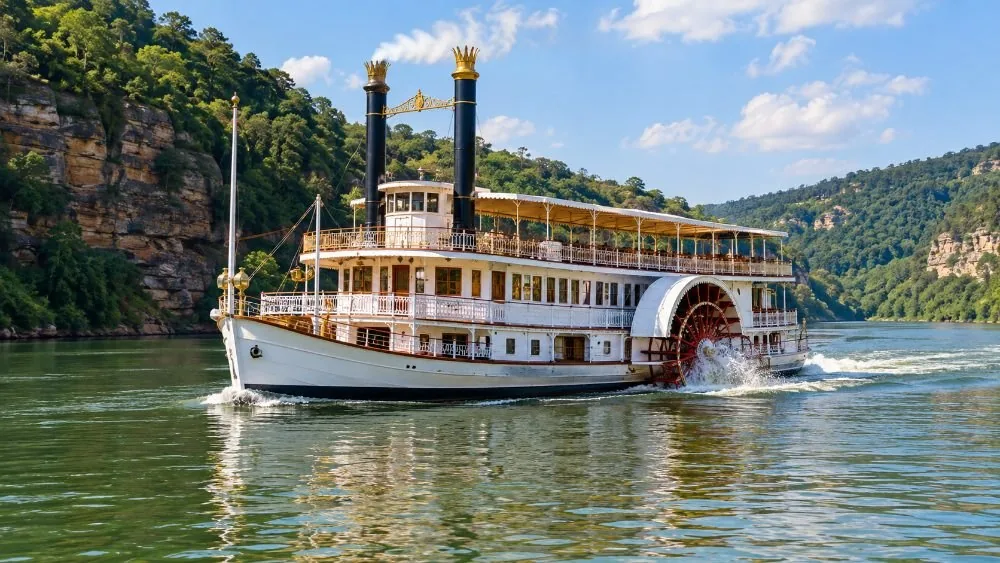
Dresden: Königstein Fortress Paddle Steamer Cruise
 Built around the fortress
From Dresden: Lilienstein & Königstein Tour
The river route is the historically honest one — everything that ever came up this rock came up the Elbe first. How to get there covers the train, the buses, the car and the paddle steamer.
Frequently asked questions
Was the Green Vault treasure really kept at Königstein?
Yes. From January 1943 the entire Green Vault collection was moved up here in crates, with 450 crates from the Historical Museum and works from the porcelain and painting collections, including Liotard’s The Chocolate Girl. At the same time the fortress was holding captured Allied officers as Oflag IV-B. It is the best single fact about the place, and it is in the exhibition you can walk through today.
Was Festung Königstein ever captured?
Never stormed and never besieged into surrender — but it was handed over on 8 May 1945 to the French General Condé, so “never changed hands” is wrong. In 1813 French troops held it by agreement with Saxony, not by conquest. The full correction is here.
How old is Königstein Fortress?
The first documentary mention is 1233, in a charter of King Wenceslas I of Bohemia. The name comes from a boundary document of 1241 that calls the place in lapide regis. It became a state fortress between 1589 and 1591 and has been a museum since 1955. Whether that history is worth your day is a separate question.
Who was imprisoned at Königstein?
Caspar Peucer, Chancellor Nikolaus Krell, Johann Friedrich Böttger, Johann Reinhold von Patkul, Mikhail Bakunin after the Dresden May Uprising, August Bebel, the caricaturist Thomas Theodor Heine, Frank Wedekind, the French generals Giraud and Prioux, and in April 1945 Tadeusz Bór-Komorowski of the Warsaw Uprising. Dates and details are on the prisoners page.