Key takeaways
- GetYourGuide sells no ticket to this fortress. Its attraction page and the Königstein destination page carry four products between them, all of them tours or cruises — no timed entry, no skip-the-line admission, no ticket-only listing of any kind. Where the tickets really come from.
- Two of the six tours here set foot on the rock. One sails to the town beneath it, two pass it on the river, and one never goes near it. All six, grouped by what they actually do.
- 240 metres stand between the river and the gate. The panoramic lift climbs about 42 metres of vertical rock but runs April to October only; the passenger and goods lift, licensed for 42 people, runs year-round; the walk up from the town takes 30 to 45 minutes. Every way up, compared.
- The last road-train down leaves at 17:00. The Festungsexpress runs April to October, on the hour and half-hour from 09:00 to 16:30, and the car park at the B172 turn-off is 650 metres on foot from the fortress. Where to leave the car.
- There is no free part. Asked straight out whether you can skip the exhibitions and just walk about outside, the fortress says no: all 9.5 hectares and 50-plus historic buildings are one open-air museum. The direct answer.
- Give it 2 to 3 hours. That covers the 1.8-kilometre wall circuit and the headline exhibitions. The full 33 rooms of In lapide regis plus a guided tour makes it half a day. How long you actually need.
What admission covers, and what it does not
Two lists. The gap between them is where almost every misunderstanding about this rock lives, and I spent four seasons explaining it through a ticket window.
Inside the walls
- The whole 9.5-hectare plateau and more than 50 above- and below-ground structures. The fortress treats all of it as one open-air museum, which is why the grounds are not free to walk
- In lapide regis, the permanent exhibition across 33 rooms, open since 1 May 2015 and named for the 1241 charter phrase that gave the rock its name
- The outer-wall circuit, about 1.8 kilometres, running past walls and cliff faces that reach 42 metres high — that is a height, not a thickness, whatever you read elsewhere
- The garrison church, the well house over the 152.5-metre shaft, both arsenals and the Riesenfass replica. Everything on the plateau
Bought or arranged separately
- Getting up. Whether lift use is included in admission is not published anywhere I can point you at, so I will not tell you either way — ask at the window
- The Festungsexpress road-train, April to October only, and the car park at the B172 turn-off, which is open year-round and 650 metres from the fortress on foot
- The audio guide, which the fortress rents in 10 languages, alongside easy-language versions and a German Sign Language video guide. Guided, or on your own
- Anything on GetYourGuide. Four products carry this fortress’s name and not one of them is an admission ticket. Why that is
The plateau, in the order I would walk it
Our sequence, not an official route. The fortress does not publish one.
Everything on this rock sits inside a ring wall 1,800 metres long, and the walkable circuit is about 1.8 kilometres. You can do it in any order you like; this is the order that stops you doubling back, and it leaves the two best stories — the escape and the break-in — until you are already up on the wall. Each building in detail.
- Torhaus and the ramp — The main gate, built 1589–1591 when Elector Christian I turned a medieval castle into a state fortress, with its three-wing front. I sold tickets behind that front for four seasons and can tell you the queue moves.
- Streichwehr — The flanking battery of 1591, five casemates deep. I guided in them for three more seasons. Take a layer: they are cold in August and colder in February.
- Georgenburg — The medieval nucleus of the place, rebuilt from 1605, given its arcades, and renamed the Johann-Georgenburg in 1619.
- The garrison church — St George, the oldest structure on the rock: late Romanesque, rebuilt in late Gothic by Duke George the Bearded in 1516, consecrated as the Georgenkapelle in 1676 and re-consecrated in 2000. Galleries, a Jehmlich organ, restored ceiling paintings, and services, weddings and baptisms still held in it. The exhibition inside runs April to October.
- Brunnenhaus and the well — 152.5 metres straight down, sunk 1563–1569 for Elector August under Martin Planer, a mine surveyor from Freiberg, and dug by Ore Mountains miners who had to lift about 8 cubic metres of water a day out of it while they worked. Jean de Bodt vaulted it over in 1735–1737. Deepest in Saxony, not in Germany.
- Magdalenenburg and the Riesenfass replica — A pleasure palace of 1622–1632, converted into a provisions magazine in 1819. The giant barrel below it is a replica and says so: the original was built 1722–1725 for Augustus the Strong, held 249,838 litres, and was taken apart in 1818 once it had rotted.
- The two Zeughäuser — Arsenals of 1594 and 1598, now carrying the military-history exhibitions. The barracks beside them are billed as the oldest surviving in Germany.
- Friedrichsburg — Put up in 1589–1591 as an observation tower called the Christiansburg, then redesigned in 1731 into the baroque pleasure pavilion you are looking at.
- Out onto the wall, and Giraud’s descent point — Somewhere between the Königsnase and the Blitzeichenplateau, General Henri Giraud went over the edge on 17 April 1942 on about 50 metres of rope fitted with a wooden seat, and was down in roughly two minutes. He picked a spot the observation tower cannot see. The fortress’s own account says the exact route has never been established. The only escape that ever worked.
- The Abratzky-Kamin — A crevice in the outer sandstone about 34 metres long, graded IV on the Saxon scale. Sebastian Abratzky, a chimney sweep of 18, free-climbed it on 19 March 1848 to avoid paying admission and pulled himself onto the rampart as the bells struck noon, about 90 minutes after starting. What happened to him afterwards.
- Blitzeichenplateau — Finish here. The beer garden works April to October, and straight across the river is the Lilienstein, 415.2 metres, with the Elbe bending 180 degrees around it. The rock you are looking at.
Two to three hours covers that walk and the headline exhibitions, which is both the fortress’s own recommendation and what I would budget for a first visit. The full 33 rooms of In lapide regis with a guided tour on top realistically makes it half a day — and a Dresden day trip does not hand you half a day. Reviewers on the seven-hour trip report about two hours on the rock and about ninety minutes in the national park, with more than one of them saying they wanted longer up here. How long to allow, and what the day takes out of you in hours and metres.
How booking through this site works
Work out whether you need to book anything
You do not need a ticket in advance. The fortress sells its own at the windows from 09:00 to 17:00 and recommends booking ahead to skip a queue, not to secure a place. What you may need is the 39 kilometres from Dresden.
Check what the product actually does
Of the six listings here, two set foot on the fortress, one sails to the town beneath it, two pass it on the river, and one does not go near it. The titles do not always make that obvious.
Read the entry line, word for word
One day trip says in its own description that fortress entry is not included. Another lists the fortress as a line item but never uses the word admission. Both of those sentences matter more than the star rating above them.
Check live dates
Availability below comes straight from GetYourGuide with instant confirmation. We take no bookings and issue no admission of any kind — we are an independent guide, not the fortress and not an operator.
Check dates on the trip most people book
The seven-hour Saxon Switzerland day trip out of Dresden is the default first booking, at 4.7 from 1,133 reviews, and it genuinely stops at the fortress. Read its own wording before you book: “Explore the Königstein Fortress, one of the largest fortifications in Europe (entry not included)” — against the Bastei line on the same page, which says entry is included. You buy your admission at the window when you get here. The guide is described as German-speaking, and English speakers in the reviews report getting by on a phone translator.
Three ways to arrive, side by side
The middle column is the only product on GetYourGuide built around this fortress, and it is brand new: no rating, no reviews, nobody has been on it and written it up yet. I am featuring it anyway, because it is the one where the fortress is the point rather than a stop, and because an unreviewed listing that goes in is more use to you than a well-reviewed one that does not. Treat the entry line carefully: the fortress visit is a line item on its inclusions list, but the page never uses the word admission.
| From Dresden: Saxon Switzerland National Park Full-Day Trip | Actually goes inFrom Dresden: Lilienstein & Königstein Tour | Dresden: Königstein Fortress Paddle Steamer Cruise | |
|---|---|---|---|
| Does it go in? | Yes — and it says entry is not included | Yes — listed as a line item | No — sails to the town below the rock |
| Rating | 4.7 from 1,133 | No reviews yet | 4.5 from 622 |
| Duration | 7 hours | 9–12 hours | 4.5–9.5 hours |
| Group size | Not published | Limited to 7, small groups up to 8 | Not published |
| Languages | German-speaking guide | English, Spanish, Czech, German | English, German |
| Departs from | Dresden | Dresden and Pirna | Dresden |
| Also takes in | Bastei, Schrammsteine, Rathen | Lilienstein and the national park | Pillnitz, the Elbe castles, Pirna, Stadt Wehlen, Kurort Rathen |
| Food | Not published | Lunch at the castle, listed | Food and drinks on board, listed |
| The thing to check | That you have your own admission plan | That you are comfortable being first | Whether your booking option includes fortress entry |
| Best for | Three sights in one day | A day built round the fortress | Arriving by river, and looking up |
| View → | Book this → | View → |
Photo Gallery
Nine frames from the rock
Nine of the things I would point at if I were walking you round: the gate, the drop, the well house, the rock opposite. Tap any of them to open it full size.
All six Königstein tours we cover
Six listings, and only two of them put you inside the walls. The cards carry a duration where you would expect a figure, because nothing on this site is costed in money — the operator’s own widget handles that part. The hub, grouped by what each one really does.
 Most booked
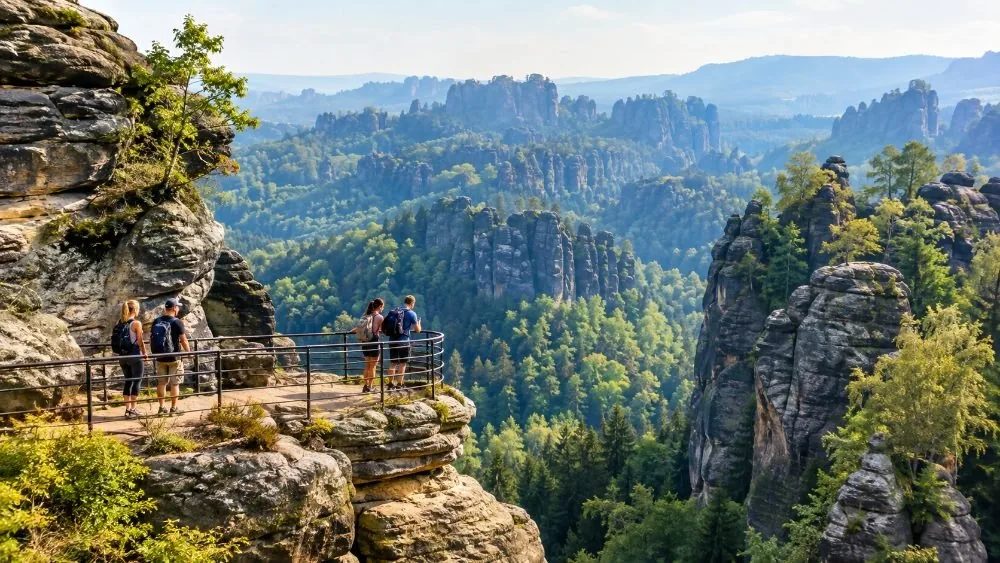
From Dresden: Saxon Switzerland National Park Full-Day Trip
 Built around the fortress
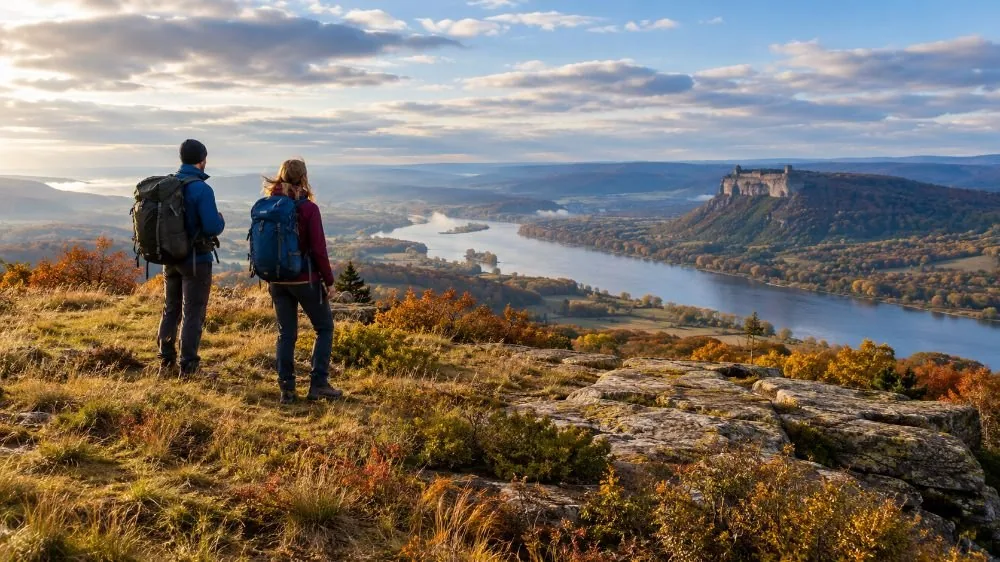
From Dresden: Lilienstein & Königstein Tour
 Arrive by river
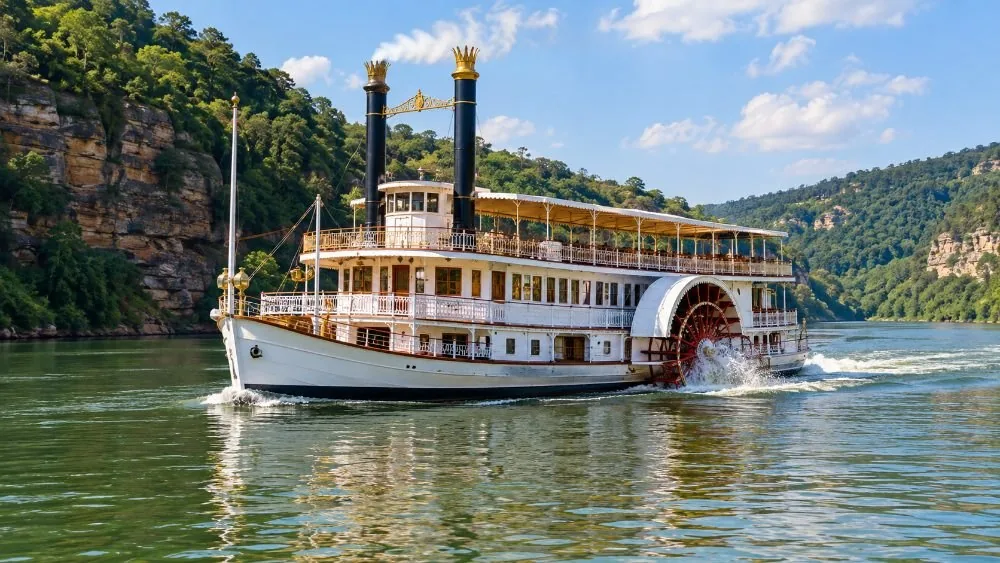
Dresden: Königstein Fortress Paddle Steamer Cruise
 Half-day on the Elbe
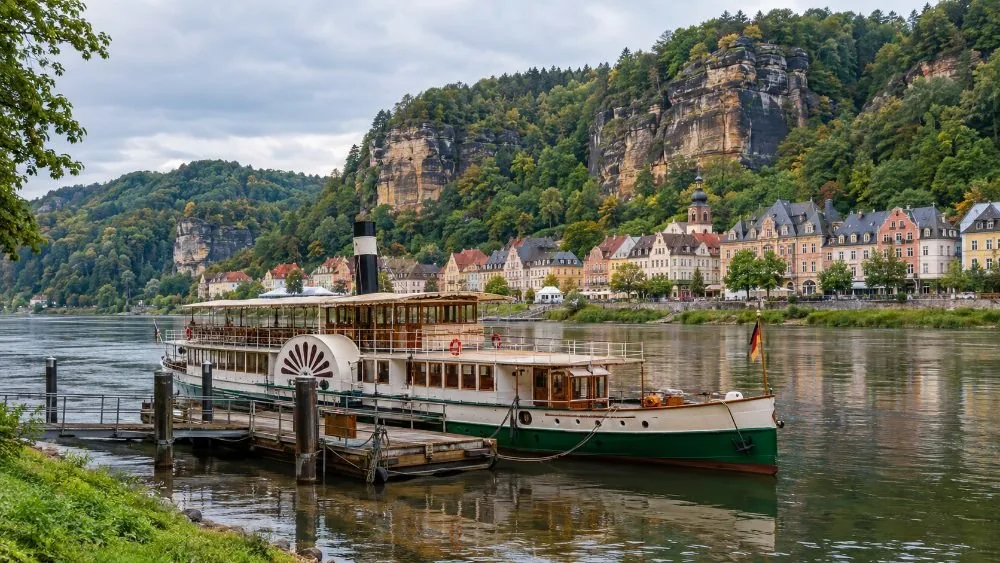
Bad Schandau: Saxon Switzerland Boat Trip
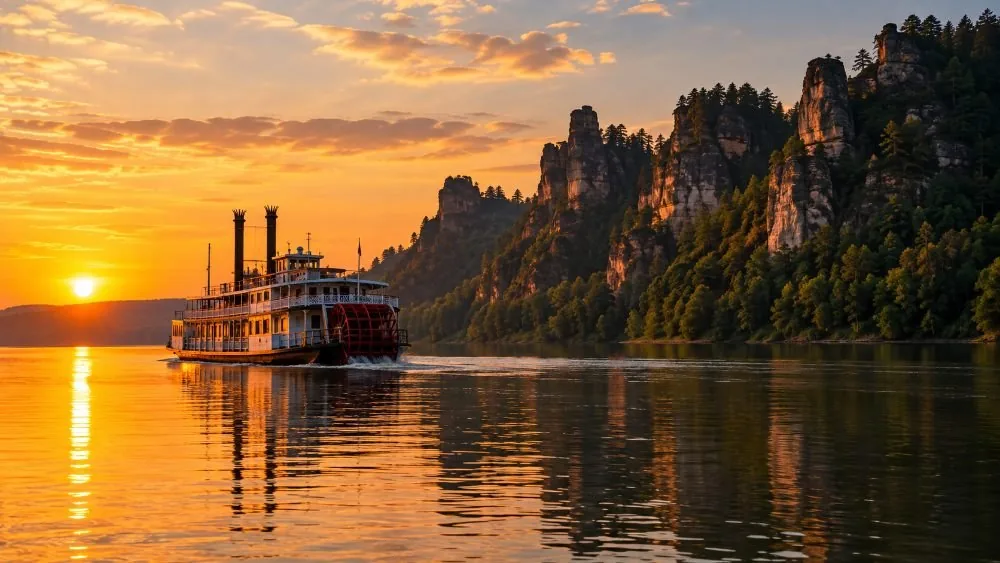 Friday & Saturday evenings
Bad Schandau: Romantic End of the Day Tour (L33)
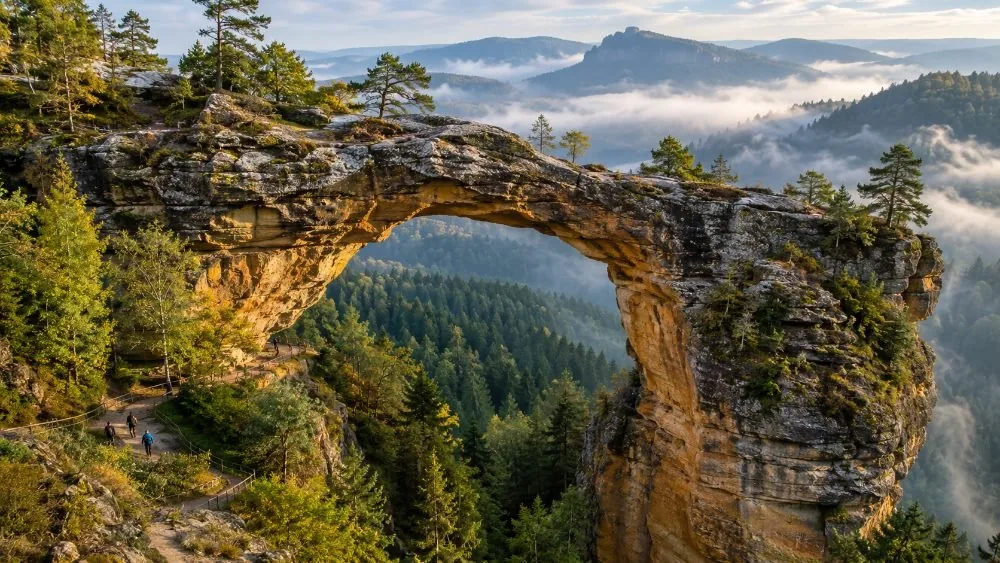 Bastei, not the fortress
From Dresden: Hassle-free Trip to Bohemian and Saxon Switzerland
What people actually wrote
Straight from the operators’ GetYourGuide listings, including the reviewer who found the audio guide too quiet. Two notes before you read them. GetYourGuide machine-translates reviews into whatever language the page is served in, so anything from a German or Danish reviewer is the platform’s English, not theirs. And the one tour on this site built around the fortress has no reviews at all yet, so it is not quoted here.
This tour covered the highlights of visiting Saxon Switzerland and the nearby Königstein Fortress. The tour guide was very humorous and told us many stories during the driving portion. The bus was comfortable and we had about ninety minutes to explore Saxon Switzerland and about two hours at the Fortress. I would recommend this tour because of how easy it was to get from downtown Dresden via this bus to see beautiful sights.
This trip was a lot of fun and a great way to see three major tourist attractions outside of Dresden. We had ample time to explore each location. If you are from the States, the rock formations at the National Park are remarkably similar to the Wisconsin Dells. We don’t speak German and were able to use the live translation on our phones to understand the guide, who offered excellent often humorous commentary on the ride.
A super relaxing trip for me and my son. The ship was an absolute highlight; my son found it very fascinating to watch how the paddle wheels are driven.
The boat trip from Dresden to Bad Schandau is definitely recommended. A beautiful side as seen from the Elbe. Lots of nature – just great. The only drawback is that there is no live guide. You got information via an audio guide, which is actually okay – only in this case, unfortunately, it was much too quiet.
A very nice trip on the Elbe with the paddle steamer. Highly recommended. My family and I loved it.
It was a nice day. The hiking wasn’t hard but it was VERY uphill and A LOT of stairs.
Ratings and reviews are the operators’ live GetYourGuide figures. Read our full tour reviews ›
Four things I was asked at the window every single day
Four seasons of the same four questions, answered in a paragraph each.
Was Napoleon locked up here?
No. He came as a visitor on 20 June 1813, stayed about an hour, inspected the works, said he approved, and turned down the sedan chair they offered him for the way down — he walked. What followed was a military road from Stolpen to the Elbe, two pontoon bridges over the river, and 485 French soldiers stationed up here by August. He was never a prisoner on this rock, and the reason he was never executed has nothing to do with Saxony: Elba in 1814 under the Treaty of Fontainebleau, then surrender to the British after Waterloo and deportation to St Helena, where he died in 1821. The visit, hour by hour.
Did Böttger invent porcelain in the casemates?
He did not. Johann Friedrich Böttger was held here in 1706–1707 as leverage, because Augustus the Strong wanted gold out of him and later porcelain. The white porcelain breakthrough came in 1708, after Königstein, at Dresden and Meissen. He is one of a long line: Caspar Peucer from 1574, Chancellor Nikolaus Krell from 1591, Bakunin after the Dresden May Uprising, August Bebel, Frank Wedekind. Three hundred years of state prisoners.
Is it the deepest well in Germany?
No, and the fortress makes no such claim — that one comes from everybody else. It is 152.5 metres, the deepest in Saxony, and the well at Burg Kyffhausen is deeper. The number is impressive enough without the record: miners from the Ore Mountains sank it between 1563 and 1569 and had to clear about 8 cubic metres of water a day while they did it. The well, properly explained.
Can I just walk round outside without paying?
No, and I know how that sounds when the walls are visible from the road. Asked directly whether admission is needed if you skip the exhibitions, the fortress answers yes, because the entire complex is a 9.5-hectare open-air museum with more than 50 historic military buildings on it. There is no outer ring you can wander for nothing. The question, asked and answered.
Can’t make these dates?
Browse more available Königstein Fortress tours and find one that fits your schedule — all with instant confirmation and free cancellation.
Königstein, explained
I grew up in the town directly beneath this rock and worked seven seasons on top of it, four of them on the ticket windows in the Torhaus. The question I got most was not the one about Napoleon, though that came second. It was: which part can I see without paying. The answer is none of it, and the reason is the whole point of the place.
A table mountain that was most of the way to being a fortress
Start with the geology, because everything follows from it. The river and the weather cut this plateau into separate blocks and left flat-topped tables with sheer sides. Königstein is one of them: 9.5 hectares of level ground standing 240 metres above the Elbe, with cliff faces and walls reaching 42 metres round the rim. That 42 is a height, not a wall thickness. Run 1,800 metres of wall along the edge and you have something that barely needed fortifying.
People worked that out early. The first written mention is 1233, in a charter of King Wenceslas I of Bohemia naming a Burggraf Gebhard vom Stein. In 1241 the Oberlausitzer Grenzurkunde records the place as in lapide regis, on the stone of the king — the source of the name, and the title of the permanent exhibition today. The early 13th-century chapel is still up there as the garrison church, still the oldest structure on the rock. Elector Christian I turned the castle into a state fortress in 1589–1591, and from the late 16th century it served as a state prison for roughly three hundred years. The full chronology.
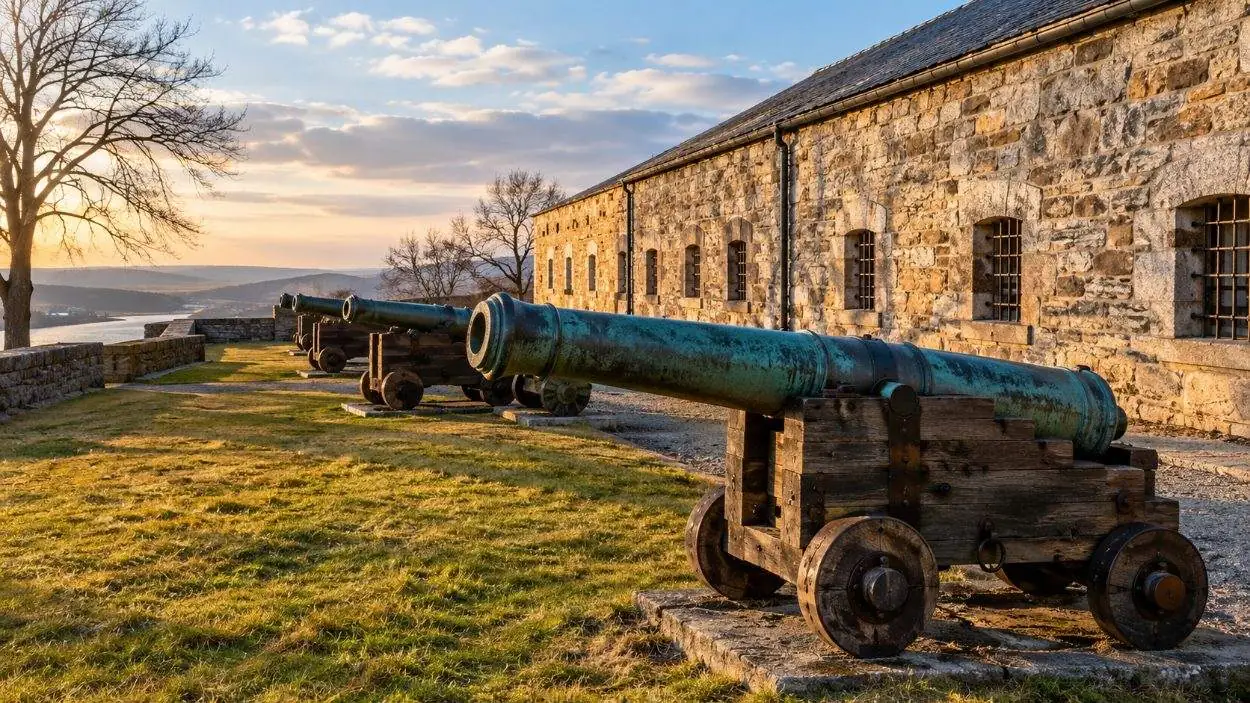
The crates in the cellars
If you remember one thing from this page, make it this one. From January 1943 the entire Green Vault treasure was brought up here in crates for safekeeping, along with 450 crates from the Historical Museum and pieces from the porcelain and painting collections, Liotard’s The Chocolate Girl among them. At the same time the fortress was Oflag IV-B, a camp for high-ranking Polish, French, British, Dutch, Norwegian and American officers. On 8 May 1945 it was surrendered to French General Condé; Soviet troops arrived the next day, removed the valuables and the German guards, and left. The GDR made the place a museum in 1955; in 1991 it passed to the Free State of Saxony.
The ticket situation, in two sentences
GetYourGuide sells no admission ticket to this fortress: between its own attraction page and the Königstein destination page there are four products, every one of them a multi-hour tour or a cruise. And you do not need one in advance anyway, because the fortress sells its own at the windows from 09:00 to 17:00, every day except 24 December, and recommends booking ahead to skip a queue rather than to secure a place. The working, shown.
The problem is not the ticket. It is 240 metres.
This is the part nobody plans for. The car park at the B172 turn-off is 650 metres on foot from the fortress; the station on the S1 line is about a twenty-five minute walk away and is not step-free. From the town, two marked trails take 30 to 45 minutes — the blue route from the Protestant church, mostly steps, and the red route along the Alte Festungsstraße. The Festungsexpress road-train runs April to October, on the hour and half-hour from 09:00 to 16:30, and the last return from the fortress leaves at 17:00.
The two lifts get confused constantly. The passenger and goods lift of 1967–1970 is licensed for 42 people, has two intermediate stops, takes vehicles up to 4.5 tonnes and runs year-round; my grandfather was one of the fitters on it, which is why I am tedious on the subject. The Panoramaaufzug is the glass one: built 2005, in service from Easter 2006, climbing about 42 metres of outer rock face, maximum 18 passengers, April to October only. Whether lift use is included in admission is not published, so I will not pretend to know. Every route up, compared.
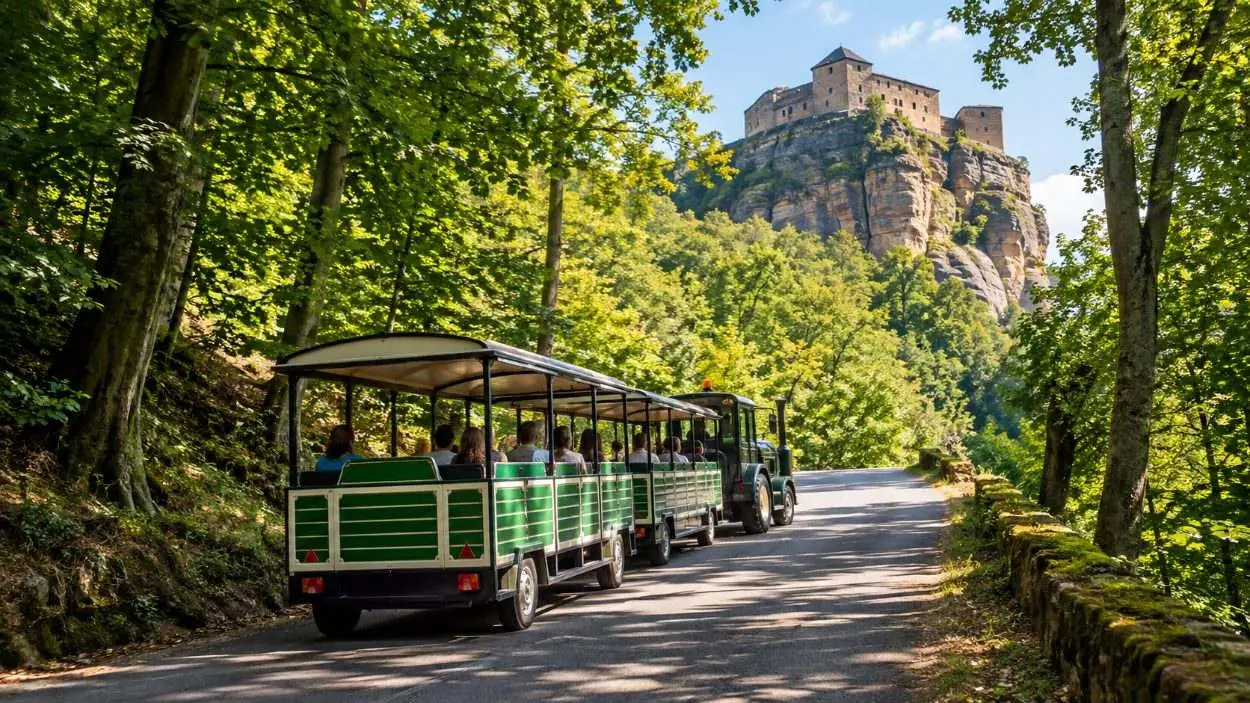
Three things I corrected every working day
Napoleon was never imprisoned here. He visited on 20 June 1813, stayed about an hour, inspected the works, expressed approval and declined the sedan chair offered for the way down. He walked. Afterwards a military road went in from Stolpen to the Elbe and by August there were 485 French soldiers up here. The visit in detail.
“Never conquered” needs a footnote. Never stormed and never besieged into surrender, yes. Never changed hands, no — it was handed over on 8 May 1945. In 1756 nobody attacked it; Elector Friedrich August II watched from up here while the Saxon army capitulated to the Prussians near the Lilienstein. In 1813 the French held it by agreement with Saxony, not by conquest. The claim, tested.
There is no free part. Asked straight out whether you must pay if you only walk around outside and skip the exhibitions, the fortress says yes, because the whole complex is a 9.5-hectare open-air museum with more than 50 historic military buildings on it. The wall circuit is not a park with a museum in the middle. It is the museum. Asked and answered.
What I would do with a day
Two to three hours covers the circuit of about 1.8 kilometres and the exhibitions most people come for. Take all 33 rooms and a guided tour and you are into half a day, which a seven-hour trip out of Dresden will not give you — reviewers on that one report roughly two hours on the rock. If the fortress is why you are coming to Saxony, come under your own steam or take one of the two tours that genuinely goes in. And check the official calendar first: single closure days appear year to year.
Frequently asked questions
Is Festung Königstein worth visiting?
Yes, with conditions I would rather state up front. It is 9.5 hectares of open-air museum with more than 50 buildings on it, and most of the walking is outdoors, so a wet day takes a lot of it away from you. Under two hours is not enough. And a tour that only passes the rock on the river, or stops at the Bastei instead, is not a visit to this fortress at all. Our honest verdict, and how it compares with the Bastei if you only get one of them.
How long do you need at Königstein Fortress?
Two to three hours is the standard recommendation and it is a fair one: that covers the wall circuit of about 1.8 kilometres and the headline exhibitions. If you want all 33 rooms of In lapide regis and a guided tour as well, treat it as half a day. Reviewers on the seven-hour Dresden day trip report about two hours up here, and several of them wanted more. How the time actually splits.
Can I buy Königstein Fortress tickets on site?
Yes. The fortress sells its own at the windows from 09:00 to 17:00, every day except 24 December, and nothing in its published guidance suggests they sell out. It recommends booking ahead to skip a queue, not to secure a place. GetYourGuide carries no admission ticket for this fortress at all — the four products under its name are multi-hour tours and cruises. The ticket situation in full, and the opening hours by season.
Is there a lift at Festung Königstein?
There are two, and they are different things. The passenger and goods lift dating from 1967–1970 is licensed for 42 people, has two intermediate stops, carries vehicles up to 4.5 tonnes and runs year-round. The Panoramaaufzug, built in 2005 and in service since Easter 2006, climbs about 42 metres of the outer rock face, takes a maximum of 18 passengers, and runs April to October only. Whether lift use is included in admission is not published, so ask at the window. Lifts, road-train and the two footpaths.
Was Festung Königstein ever attacked or conquered?
It was never stormed and never besieged into surrender, which is where the “never conquered” line comes from. It did change hands: on 8 May 1945 it was surrendered to French General Condé. In 1756 the fortress itself was not attacked — Elector Friedrich August II watched from up here while the Saxon army capitulated to the Prussians near the Lilienstein. In 1813 there was fighting before the gates, but French troops held the place by agreement with Saxony rather than by conquest. By 1866 long-range artillery had made it militarily pointless. The claim, tested.
Who was imprisoned at Königstein?
It served as a state prison for roughly 300 years. Caspar Peucer from 1574, the Saxon Chancellor Nikolaus Krell from 1591, Johann Friedrich Böttger and Johann Reinhold von Patkul in 1706–1707, the Russian anarchist Mikhail Bakunin in 1849–1850 after the Dresden May Uprising, August Bebel in 1872–1874, the caricaturist Thomas Theodor Heine in 1899 and Frank Wedekind in 1899–1900. From 1939 to 1945 it was Oflag IV-B, a camp for high-ranking Allied officers. The full list, and the one man who got out.
How deep is the well at Königstein Fortress?
152.5 metres. It was sunk between 1563 and 1569 on the orders of Elector August, directed by the Freiberg mine surveyor Martin Planer and dug by Ore Mountains miners, who had to remove about 8 cubic metres of water a day during construction. It is the deepest well in Saxony, not in Germany — Burg Kyffhausen has a deeper one, and the fortress itself makes no superlative claim. How it was dug.
Which films were shot at Festung Königstein?
The fortress says more than 30 productions have been filmed here across six decades. The confirmed ones are Ich war 19 (1968, DEFA), the five-part television series Rottenknechte (1971), Sachsens Glanz und Preußens Gloria (1985–87), Trenck – Zwei Herzen gegen die Krone (2003), Die Gräfin (2008, with Julie Delpy and Daniel Brühl) and the ARD fairy-tale film Der süße Brei (2018), shot partly in the Tiefkeller. The full list.
Still have questions? Email us [email protected]